
Graduate School Experience

I'm passionate about occupational therapy for its holistic approach to improving lives, focusing on empowering clients to regain independence and engage in meaningful activities despite their limitations. At the IU OT program, I've gained clinical expertise while embracing values of client-centered care and interdisciplinary collaboration. I'm excited to further my journey in OT, using my passion and skills to positively impact others' lives.


1st year of Occupational Therapy
Fieldwork 1A:
For my first fieldwork, my partner and I evaluated a simulated patient with a hip fracture. We spent one week assessing and another week intervening, each session lasting 45 minutes. This experience boosted my confidence and gave me a clear picture of what occupational therapy entails. It was a defining moment that solidified my passion for the field and fueled my excitement for future hands-on work. Some of my strengths during this experience included being empathetic, helping my patient feel less anxious and using my knowledge to explain her precautions.

Fieldwork 1B:
For my second fieldwork I got to go to Indianapolis public schools. I got to observe at George Julian Elementary School, Theodore Potter Elementary School, and George Washington High School. Occupational Therapy services looked different in each school and disabilities and skills varied throughout all three schools. My fieldwork coordinator gave me assignments throughout the week. Those assignments included researching strategies for different conditions such as TBI, Dyslexia, Kabuki Syndrome, and strategies to help with body awareness. I would look up evidence-based articles and write down my findings at home and come back the next day to fieldwork and let my coordinator know what I found. She would type the strategies up in an email and email it to the teachers who needed those strategies. Other assignments included typing up SOAP notes by myself, writing up a list of potential sensory equipment to add in the sensory room and producing treatment strategies for a specific student. As the week went on, my fieldwork coordinator let me conduct some of my intervention strategies and let me do 20 minute treatment sessions with some students on my own. I was able to get feedback from my SOAP notes and improve throughout the week. Everything I learned during this experience truly made it easier for me to make connections, and apply what I learned in my peds course into practice. I believe that the strategies I learned can not only be applied to peds patients but also older adults that suffer traumatic brain injuries, spinal cord injuries, down syndrome, cerebral palsy, developmental delay etc. I was able to understand that self-regulation looks different for everyone and that there are different strategies to help with sensory processing.

2nd year of Occupational Therapy
Fieldwork IC:
During my fieldwork experience at NeuroHope, I participated in adult wheelchair skills training through the Skills on Wheels program. As the only bilingual student in the group, I was paired with a Spanish-speaking wheelchair user, which allowed me to build trust and connection with him right away through clear and comfortable communication. After just two sessions, he was able to successfully perform all of the wheelchair skills we had been working on. Seeing his progress in such a short amount of time was incredibly rewarding and reinforced the impact of skilled, client-centered intervention. What stood out even more was his growing confidence he shared that he wanted to start participating in wheelchair soccer at RHI, which showed how much his independence and motivation had increased. This experience reaffirmed my decision to become an occupational therapist and highlighted the power of empowering individuals to engage in meaningful and fulfilling activities.

COTAD (Coalition of Occupational Therapy Advocates for Diversity )
My COTAD experience pushed me out of my comfort zone in many ways and played a major role in helping me develop leadership skills. I became more confident in taking initiative, collaborating with peers, and stepping into roles where I could help organize and support events. It also strengthened my ability to advocate for my classmates by recognizing needs within our program and using my voice to support inclusion and representation. Through planning and participating in events such as Hispanic Heritage Month, Friendsgiving, Black History Month (including hairstyling activities that highlighted cultural expression), and LGBTQIA+ awareness initiatives, I gained a deeper appreciation for diversity and the importance of creating inclusive spaces. Overall, this experience helped me grow both personally and professionally, especially in communication, leadership, and advocacy within occupational therapy.

3rd year of Occupational Therapy
Fieldwork 2A:
My 12-week Level II fieldwork experience took place at Ascension St. Vincent Anderson, a specialized rehabilitation facility located on Enterprise Drive in Anderson, Indiana. During this rotation, I gradually progressed from observing and treating patients with close supervision to managing a full caseload by week 8. This growth helped me build confidence, clinical reasoning, and independence as a developing practitioner. I really enjoyed this setting because it allowed me to be creative in my interventions and tailor activities based on each client’s favorite occupations and personal goals. The clinic also had a simulated work environment that enhanced treatment sessions, including tasks such as placing objects on shelves to mimic work-related activities and using sand to simulate gardening tasks, along with many other functional setups. At the end of the rotation, I completed a presentation on the benefits of tuning forks in rehabilitation, specifically how they can be used to address scar tissue, hypersensitivity, and other sensory-related challenges. Overall, this experience strengthened my clinical skills, creativity, and ability to connect meaningful activities to therapeutic outcomes.
Fieldwork 2B:
My Level II fieldwork experience at Hancock Regional Hospital took place in an inpatient acute care setting, where I primarily worked with older adult patients who were often referred to sub-acute rehabilitation or discharged directly home. This rotation provided me with valuable exposure to a fast-paced hospital environment and strengthened my clinical reasoning and time management skills. I began treating patients almost immediately under supervision and frequently collaborated with the physical therapy team to complete evaluations and provide coordinated interventions. This interprofessional approach enhanced my understanding of patient needs and supported more holistic, team-based care planning. During this rotation, I gained experience with a wide range of diagnoses, including dementia, stroke, post-operative total knee and hip replacements, and mastectomies. I provided patient education on post-operative precautions, safe techniques for dressing and bathing, and energy conservation strategies to promote safety, independence, and successful discharge planning. Overall, this experience helped me grow in confidence and competence within acute care and strengthened my ability to provide patient-centered occupational therapy services
Doctoral Capstone Experience
During my capstone experience, I focused on communication barriers for patients with limited English proficiency in an inpatient rehabilitation setting. Even though interpreter services like VOYCE and in-person translators are available, I found that gaps in communication still impacted patient understanding and care. My goal was to identify these gaps and help improve communication between patients and staff. I interviewed 30 patients using the Kawa Model to better understand their experiences, challenges, and supports, and I shared their perspectives during a staff advocacy presentation. Patients were selected through the Epic system using specific criteria. I also provided education to therapy staff on cultural humility and trauma-informed care. Findings from the interviews showed that communication barriers were still present despite interpreter use. Staff survey results showed increased knowledge and confidence in areas like cultural humility, trauma-informed care, and selecting appropriate cognitive assessments, although participation varied. To support long-term impact, I created a resource binder for continued staff education beyond my capstone experience.
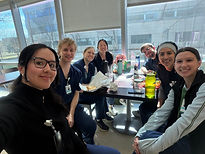

Skills on Wheels
I spent two Saturday’s volunteering at Skills on Wheels, where I got to watch and talk to the children. One of the children is fluent in Spanish, and she enjoyed asking me questions and sharing details about her family and pets. Speaking Spanish with her mother during community day was an amazing experience, as she doesn't speak English fluently. She was able to assist her daughter in performing a wheelie, by being the spotter, and it was very rewarding to see her engaging in the skills her daughter had been mastering weeks before. The mother and sister of the child were very encouraging and appeared to be enjoying themselves as they watched the child ascend curbs, go through grass, and go up and down ramps. Now that I've had this experience, I feel better prepared to guide new wheelchair users in achieving independence. By using the skills that I’ve learned through this program, I hope to encourage other wheelchair users and give them the confidence they need to begin a functional way of life. After such a great experience, I can't wait to help more with training and spotting next year and volunteer more.


